
Epistemic invalidation occurs when a person’s own knowledge or lived experience is dismissed, minimized, or denied.
The term has a longer history in disability scholarship. Susan Wendell used epistemic invalidation in The Rejected Body (1996) to describe what happens when medical authority undermines disabled or chronically ill people’s knowledge of their own bodily experience, particularly when experiences that medicine cannot adequately explain are ignored, minimized, or denied. Later disability scholarship has described Wendell’s account as a form of systematic disbelief toward embodied experience.
A person may describe what they felt, perceived, remembered, experienced, or understood and receive responses such as:
- “That’s not what happened.”
- “You misunderstood.”
- “You’re remembering it wrong.”
- “You’re overreacting.”
- “What you’re really experiencing is…”
- “If that were actually happening, you wouldn’t be able to do what you’re doing.”
The problem is not disagreement itself. People can misunderstand events, remember imperfectly, or draw conclusions that evidence later challenges.
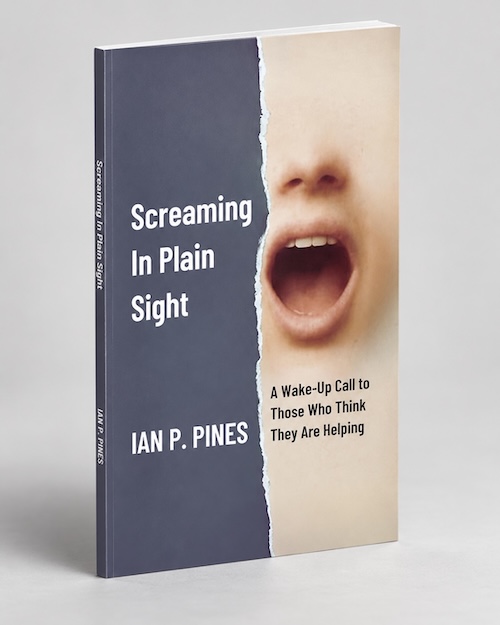
What happens when someone keeps telling the truth of their own experience-and is still dismissed, minimized, or explained away? Screaming in Plain Sight examines the damage caused when lived reality is repeatedly invalidated, and what it takes to recognize what was there all along.
A Single Event Can Be Epistemic Invalidation
Epistemic invalidation does not need to be chronic; it can be a single interaction:
- a doctor dismissing a patient’s report
- a family member replacing someone’s account with their own explanation
- an institution falling into the Recognition Paradox (treating visible competence as proof that reported impairment cannot be real).
What changes with repetition is what the invalidation can do to the person. Repeated epistemic invalidation may begin to affect the person’s relationship with their own knowledge.
They may:
- over-explain ordinary experiences;
- gather evidence before describing how they feel;
- repeatedly check their own memory;
- anticipate disbelief before speaking;
- depend increasingly on outside confirmation;
- become reluctant to correct another person’s interpretation;
- begin wondering whether their own account can be trusted.
When this begins to happen, invalidation is no longer merely something occurring between people. It may begin producing epistemic harm.
Epistemic Invalidation and Epistemic Harm
The distinction is useful:
- Epistemic invalidation is something that happens.
- Epistemic harm is damage that can result.
Not every act of epistemic invalidation produces lasting harm. But repeated dismissal, correction, overwriting, or loss of credibility can injure a person’s ability to participate confidently in knowing and describing their own reality.
In Just Sit With Me: When Understanding Is Misunderstood, M. Ian Niad describes this progression in the section “When Invalidation Destabilizes Reality.” Repeated minimization, correction, reframing, pathologization, or overwriting can eventually lead someone to question not merely whether others believe them, but whether they should believe themselves.
Epistemic Invalidation and Epistemic Trauma
Epistemic trauma describes a possible deeper and accumulated injury.
In Biasology, Niad defines Epistemic Trauma as psychological and emotional injury produced through repeated dismissal, mistranslation, or invalidation of inner truth, particularly when a person begins questioning their own perception, changing their language to remain credible, or adopting narratives that overwrite their lived experience.
The concepts therefore describe different parts of a process:
epistemic invalidation → possible epistemic harm → possible epistemic trauma
The progression is not inevitable. It describes increasing depth of injury, not diagnostic stages.
Epistemic Invalidation and Epistemic Sovereignty
Epistemic invalidation can also be understood in relation to epistemic sovereignty, described as a person’s meaningful authority over the interpretation of their own lived experience. It does not mean that people are always correct. Others can challenge facts, provide evidence, disagree with interpretations, or identify things the person could not know.
The boundary is different:
Disagreement does not require removing someone from participation in interpreting their own reality.
Repeated epistemic invalidation can erode that authority. Epistemic Sovereignty names what needs to remain intact.